
Integration
GitLab test management
Report defects to GitLab issues, use GitLab as a requirements source for traceability, and upload test results from GitLab CI pipelines. Cloud and self-managed instances supported.
OAuth-based connection. Works with GitLab.com and self-managed instances.
Trusted by QA teams at



Why GitLab + TestCollab
Why QA teams connect GitLab with TestCollab
Report bugs to GitLab instantly
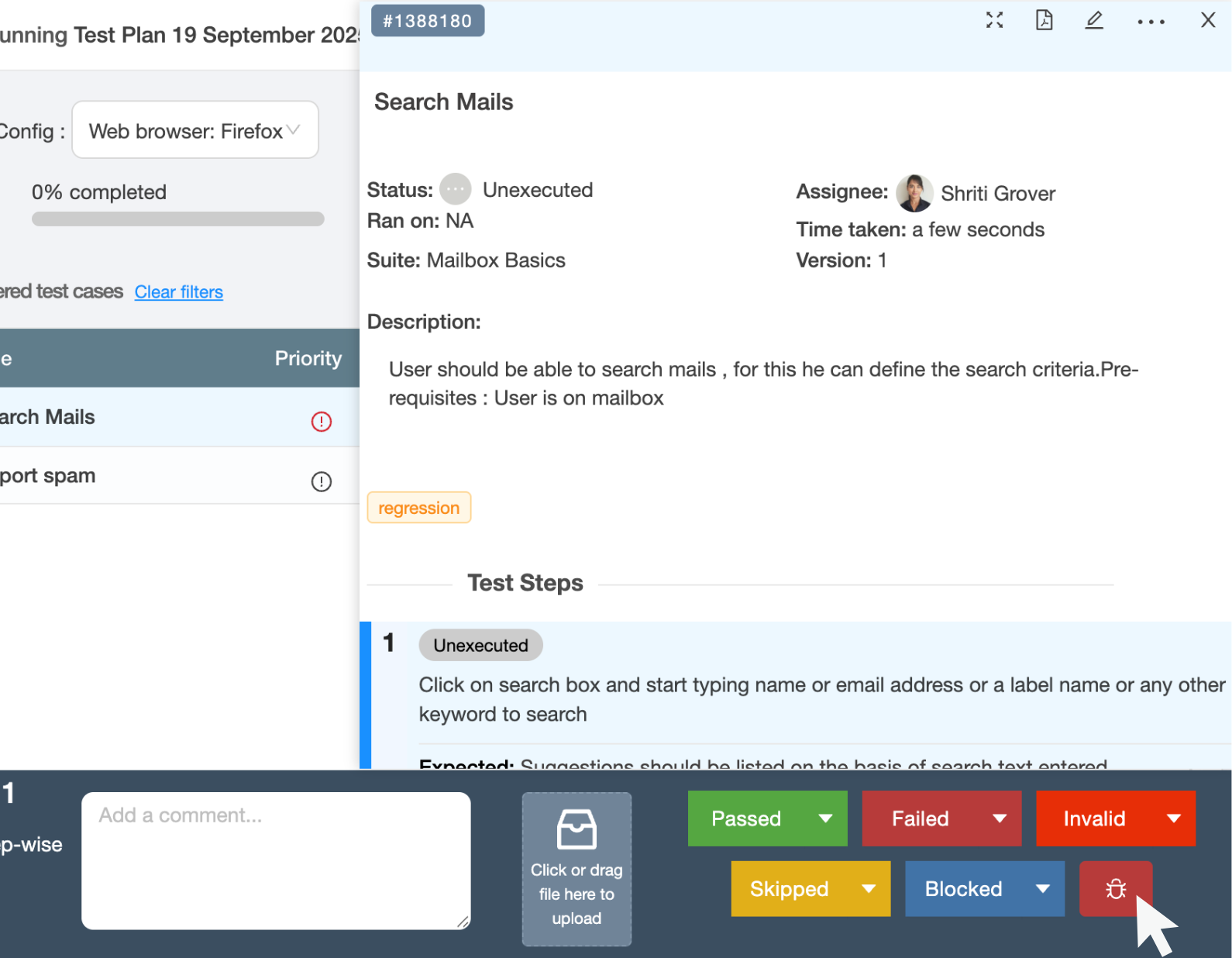
Create GitLab issues from failed test steps with project, labels, due dates, and assignees pre-filled. Developers get full context without asking for repro steps.
Requirements traceability
Use GitLab issues as requirements in TestCollab. Link test cases to requirements and generate a traceability matrix that reveals coverage gaps before release.
GitLab CI pipeline reporting
Add @testcollab/cli to your .gitlab-ci.yml. Every pipeline run uploads test results to TestCollab so dashboards stay current after every merge.
Self-managed instance support
Connect your self-managed (on-prem) GitLab instance for defects and requirements. No data leaves your infrastructure for the Git-side connection.
Defect tracking
Create GitLab issues from failed tests
One-click bug creation with full execution context. Works with GitLab.com and self-managed instances.
One-click issue creation
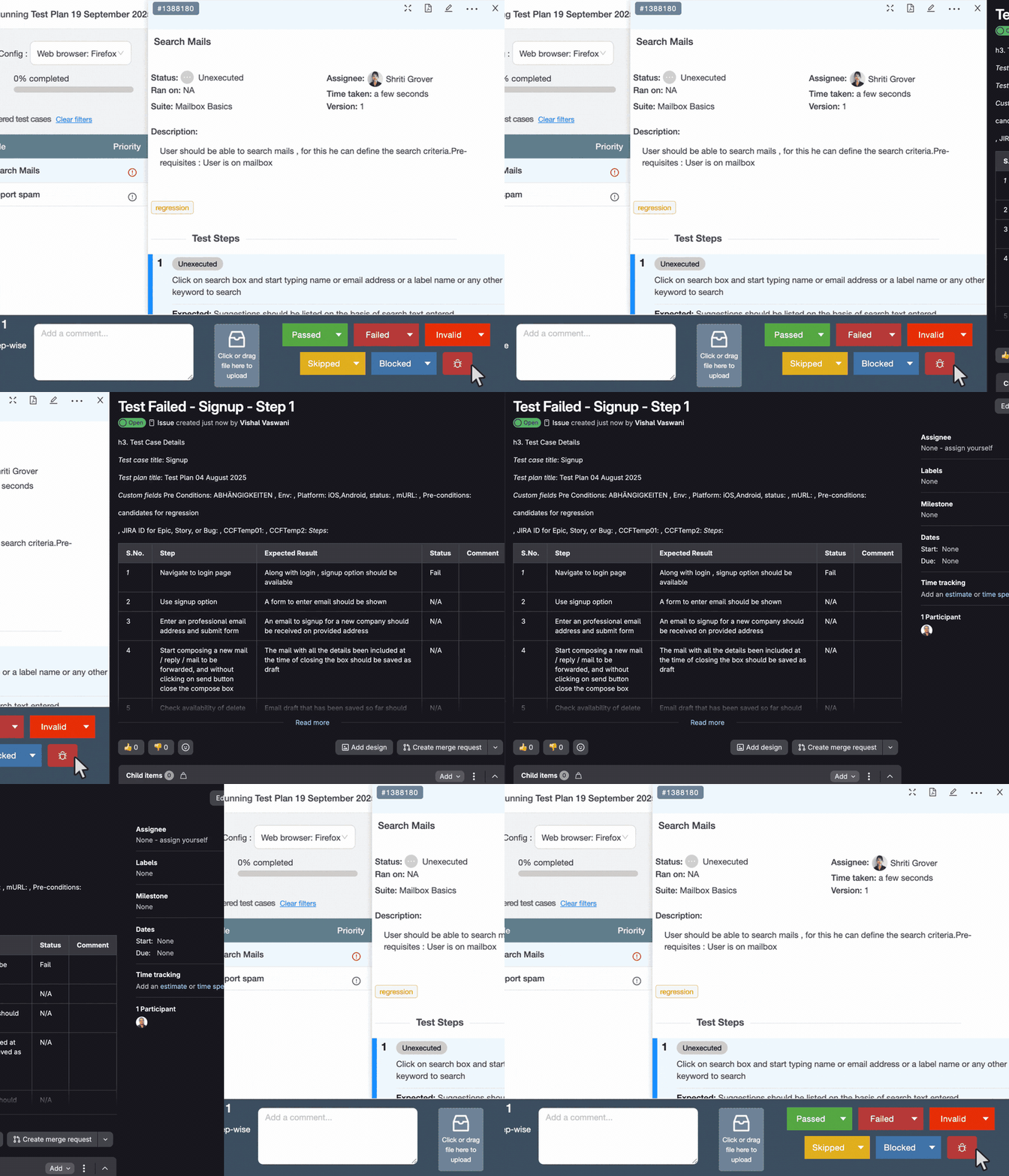
When a test step fails, click to create a GitLab issue. The issue is pre-filled with:
- Failed step details and expected vs. actual results
- Attachments and screenshots from the execution
- Project, labels, due date, and assignee from your configuration
- Direct link back to the test run in TestCollab
Configurable defaults
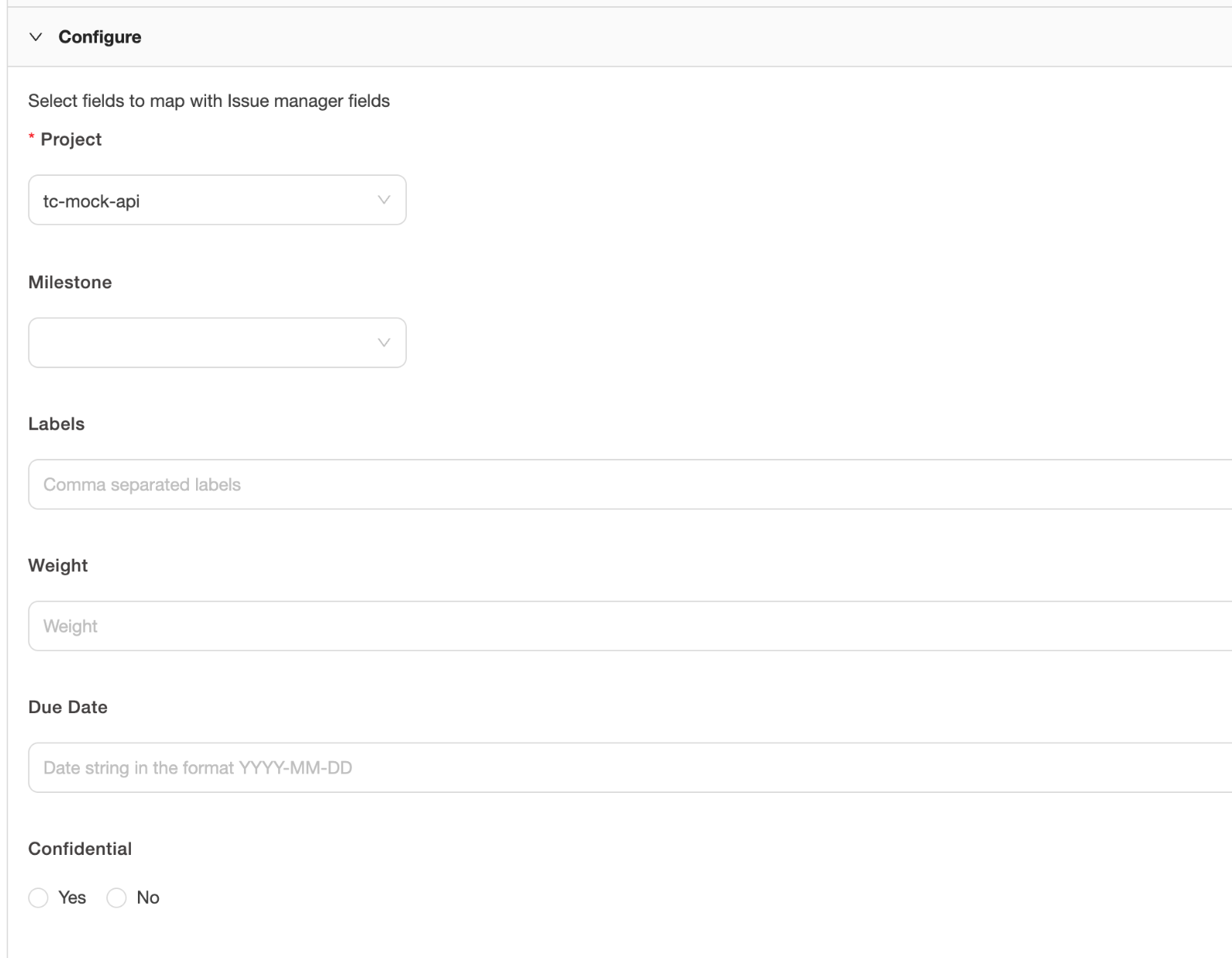
Choose the target GitLab project. Set default labels, assignees, and due date offsets. Every issue created from TestCollab lands in the right project with the right metadata.
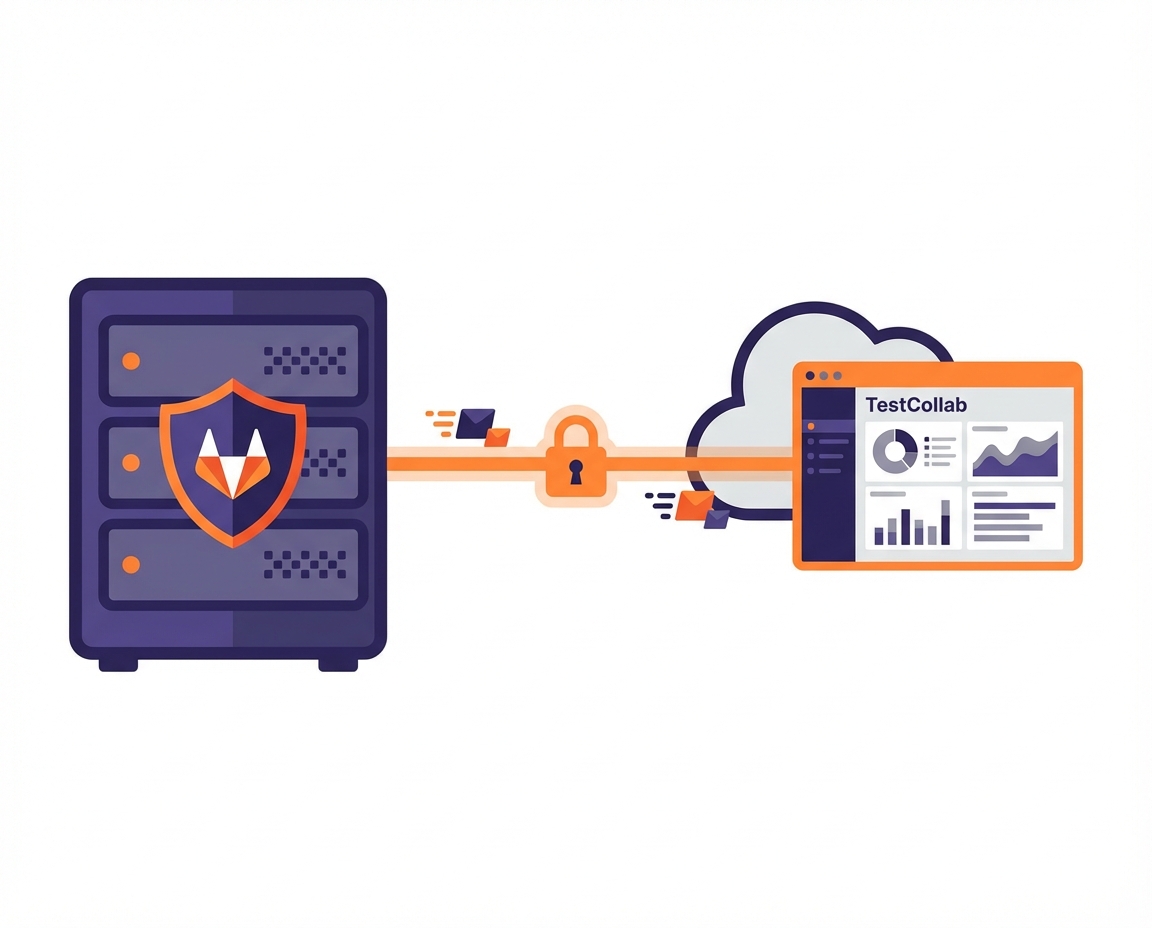
Self-managed GitLab supported
Connect self-managed GitLab instances by providing your instance URL and API credentials. Defect creation works identically to GitLab.com.
Requirements management
GitLab issues as requirements
Use GitLab issues as your requirements source and generate a traceability matrix in TestCollab.
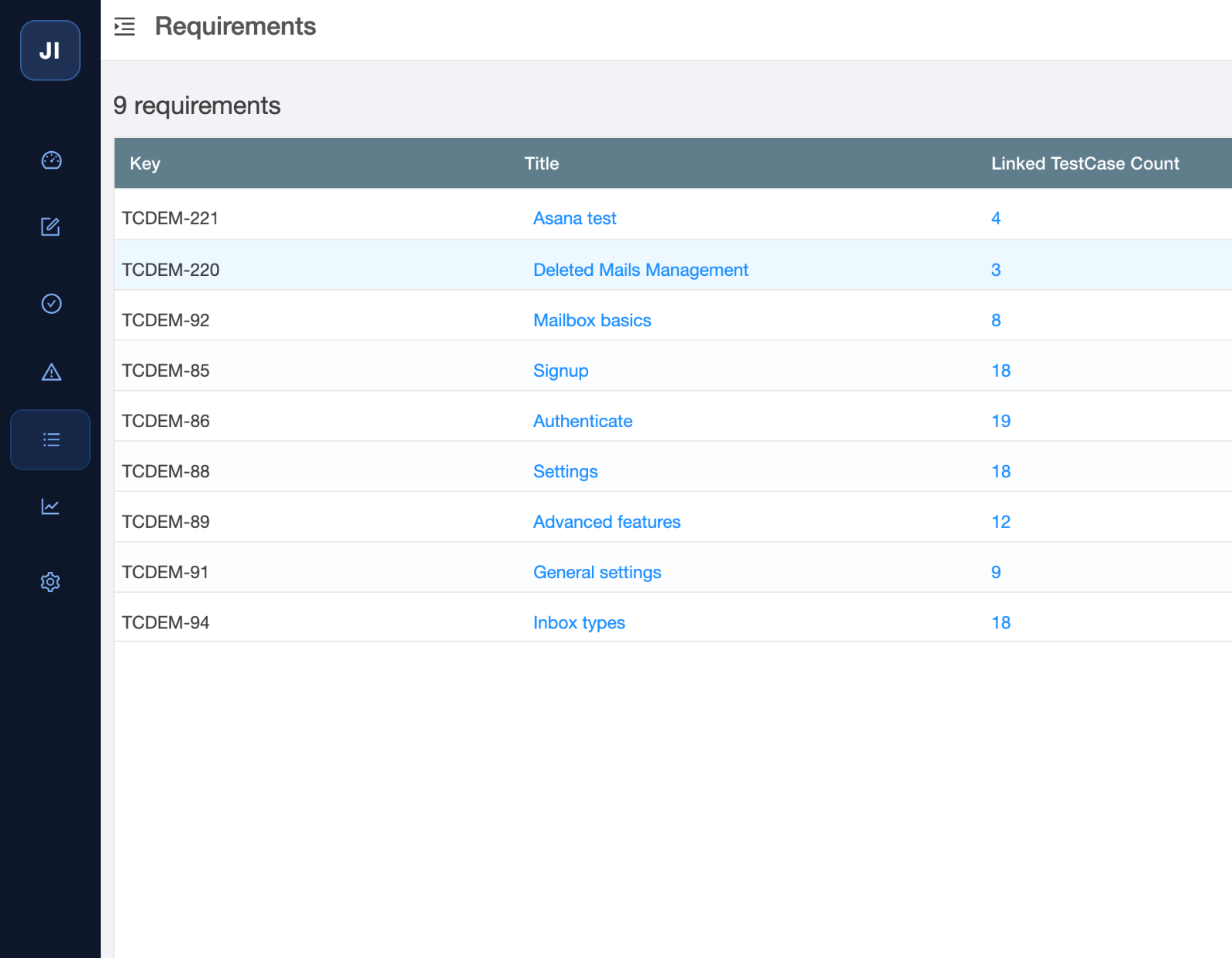
Link GitLab issues to test cases
Configure GitLab projects and issue types as requirements sources in TestCollab. Link test cases to GitLab issues from the test case editor or bulk actions.
Filter by requirement to instantly see which features have test coverage and which have gaps.
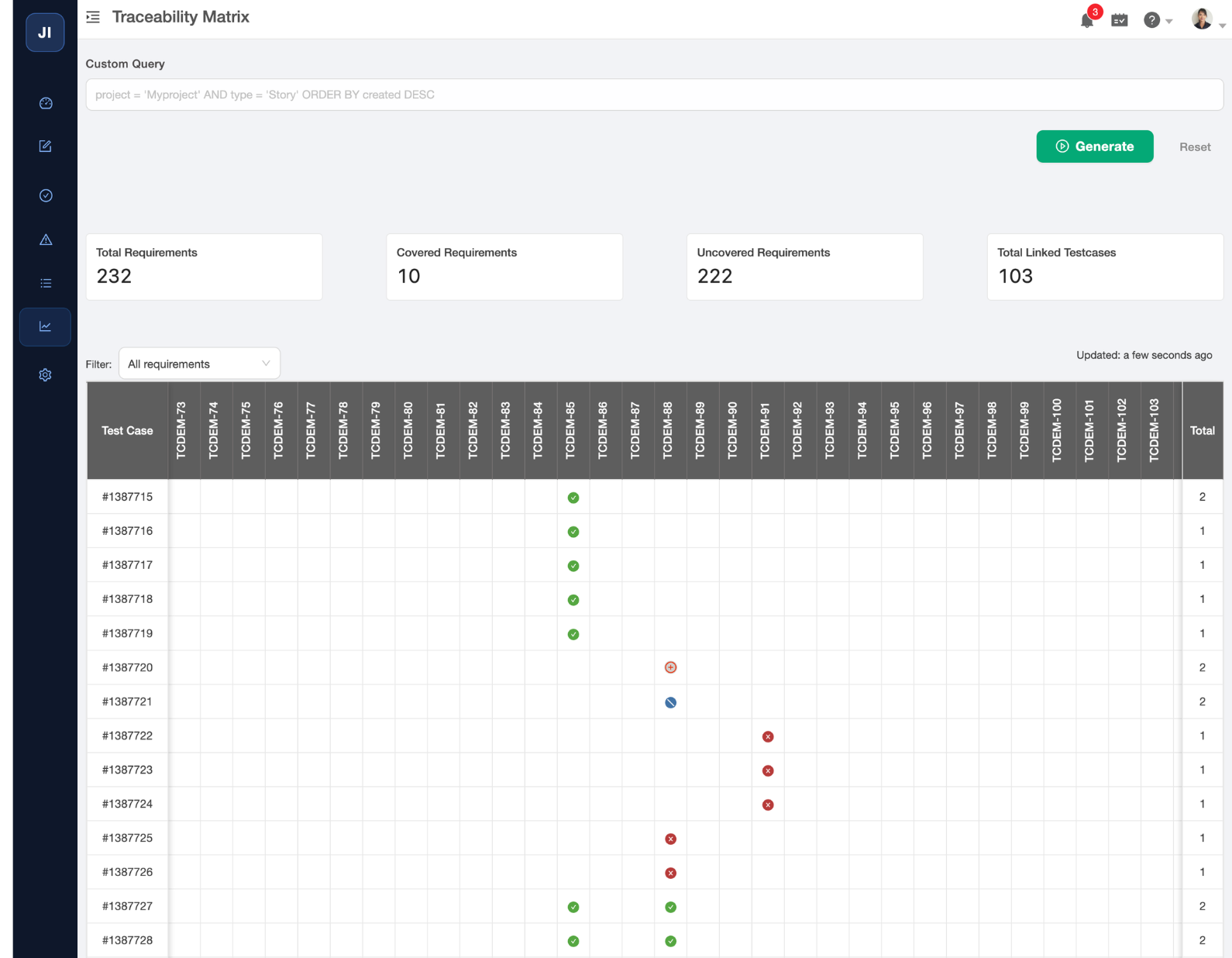
Requirements traceability matrix
Generate a live requirements traceability matrix showing every GitLab requirement, its linked test cases, and pass/fail status. Click through to GitLab or TestCollab for details.
Stakeholders see coverage at a glance before signing off on a release.
CI/CD
Report results from GitLab CI
Use the TestCollab CLI in your GitLab CI pipeline to report test results after every merge.
GitLab CI pipeline job
Add @testcollab/cli as a stage in your .gitlab-ci.yml. After your test suite runs, the CLI creates a test plan, uploads results, and updates the automation dashboards automatically. Works with any pipeline trigger - push, merge request, or scheduled runs.
BDD sync from GitLab repos
Use tc sync to push Gherkin .feature files from your GitLab repo to TestCollab. Trigger sync on every push to keep test cases up to date.
Playwright, Cypress, Selenium
The CLI accepts Mochawesome JSON output. Cypress works out of the box with our reporter plugin. Playwright and Selenium results pipe in via the same format or the REST API.
For QA leads & managers
Outcomes teams feel each release
Faster triage
Defects arrive in GitLab with repro steps, attachments, and environment data. Developers start fixing immediately instead of asking for more context.
End-to-end traceability
Trace from GitLab requirement to test case to execution to defect. Coverage reports surface gaps early. Audit trails are built automatically.
Release confidence backed by data
Every pipeline run has a test plan with pass/fail evidence. Stakeholders can drill into requirements coverage before signing off.
Security & governance
Enterprise-ready security
OAuth authentication
Connections use OAuth with scopes limited to the projects you approve. Tokens are encrypted at rest and can be revoked anytime.
Self-managed instance support
Connect on-premise GitLab instances using your instance URL and API credentials. Data stays within your network for the GitLab side of the integration.
SOC 2 Type-II certified
TestCollab is SOC 2 Type II certified. Enterprise plans include SSO, audit logs, and data residency options.
FAQ
Answers teams look for
Does TestCollab support self-managed GitLab?
Yes. Connect self-managed (on-premise) GitLab instances for defects and requirements. Provide your instance URL and API credentials during setup.
What permissions are required?
The OAuth connection requests access to create issues and read projects in the GitLab groups you select. It does not request access to your source code.
Can I use GitLab issues as requirements?
Yes. Configure GitLab projects as requirements sources, then link test cases to GitLab issues. Generate a traceability matrix to see which requirements have test coverage.
How do I report test results from GitLab CI?
Install @testcollab/cli in your pipeline, create a test plan with tc createTestPlan, run your tests, and upload results with tc report. Store the API token as a CI/CD variable. See the GitLab CI guide for setup steps.
Which test frameworks are supported?
Any framework that outputs Mochawesome JSON - Cypress (via our reporter plugin), Playwright (via Mochawesome reporter), and more. For Selenium or Katalon, use the REST API or JavaScript SDK.
Can I sync BDD feature files from GitLab?
Yes. Use tc sync from the TestCollab CLI to push Gherkin .feature files from your GitLab repo to TestCollab. Trigger it in GitLab CI on every push to .feature files.
What happens if my OAuth token expires?
You will be prompted to re-authenticate. No data is lost and pending operations resume once the new token is issued. Admins can revoke and re-issue tokens anytime.
What is the pricing?
The GitLab integration is included in all TestCollab plans at no extra cost. You pay for users, not for the number of defects created, requirements synced, or results uploaded.
Bring your QA to GitLab - defects, requirements, and CI/CD
Report bugs, sync requirements, automate test reporting from GitLab CI, and keep stakeholders in the loop.