
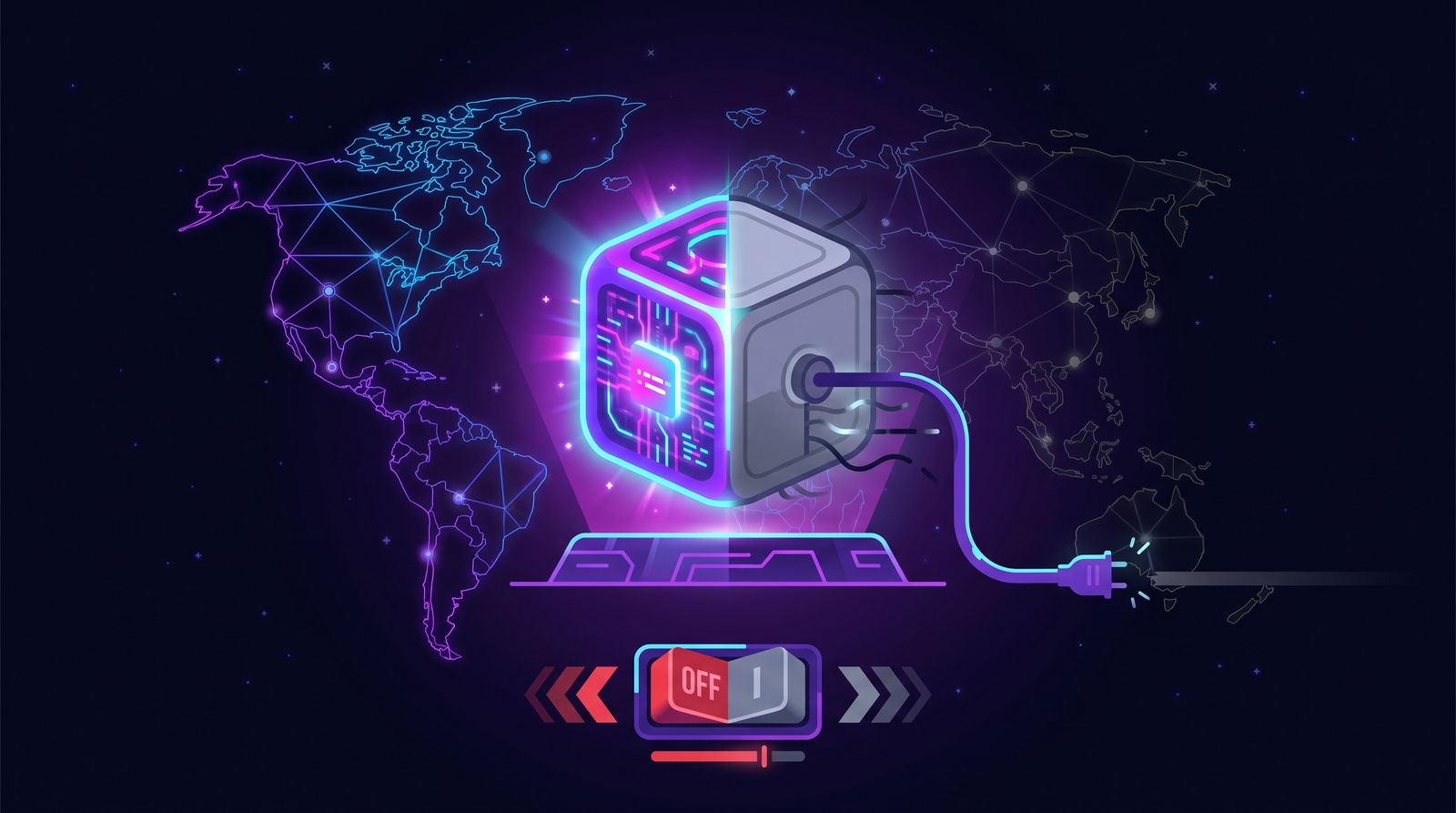
At 5:21pm on Friday, June 13, 2026, the US Commerce Department sent Anthropic a letter. By the end of the evening, two of the most capable AI models in the world, Claude Fable 5 and Mythos 5, were dark.
The order, an emergency export-control directive, barred any foreign national from accessing the models: not just abroad, but inside the US, and including Anthropic's own employees. The scope was so broad that Anthropic had to disable the models for its entire customer base to comply. The company is disputing the finding and working to restore access, but for now the most powerful version of the product is simply gone.
If your QA agents were running on Fable, they stopped working that night. You shipped no bad code. A model you do not own became unavailable, and your test pipeline went with it. That is model risk, and it is the new vendor lock-in.
The old lock-in was the tool. The new one is the model.
For two decades, lock-in in QA meant your tooling: test cases trapped in a proprietary format, a framework you could not migrate off, a license you could not escape. It was painful, but it was visible. You could see the dependency and plan around it.
The new dependency is harder to see. It is the large language model your agents think with. When you wire an AI agent into your testing workflow, you inherit every constraint of the model behind it, and the switching cost stays invisible until the model changes under you. A price increase, a quiet deprecation, or, as of last week, a government directive, and the foundation moves.
What model risk actually looks like
Model risk is not one thing. It is a category of ways a model you depend on can become unavailable or unusable:
- Regulatory and export controls. Exactly what hit Fable 5: access revoked by directive, overnight, entirely outside your control.
- Deprecation and version churn. A model you validated your suite against is retired, and behavior shifts on its replacement.
- Pricing changes. A sudden repricing turns an affordable pipeline into an expensive one.
- Regional availability and data residency. A model offered in one country is unavailable, or non-compliant, in another.
- Capacity and throttling. Rate limits during a release crunch stall the runs you need most.
Any one of these can stop a QA pipeline that has a single proprietary model as a hard dependency.
Why this hits global teams hardest
Read the Fable order again: it targeted foreign nationals specifically. A distributed QA team, with testers in the EU, contractors in India, and an SRE in Singapore, is precisely who lost access first. The same directive that was an inconvenience for a US-only shop was a full stop for everyone else.
For global teams, a single US-based proprietary model is one geopolitical point of failure, and data-residency rules only sharpen the edge. The more borders your team spans, the more exposed you are to a decision made in a single capital.
The hedge is portability, not a different vendor
The fix is not to swap one proprietary model for another. That just moves the single point of failure. The fix is to make the model swappable. Open-weight models can be run or routed across providers and regions, and your test agents should treat the model as a replaceable part, not a foundation you pour concrete on.
Where Hermes fits
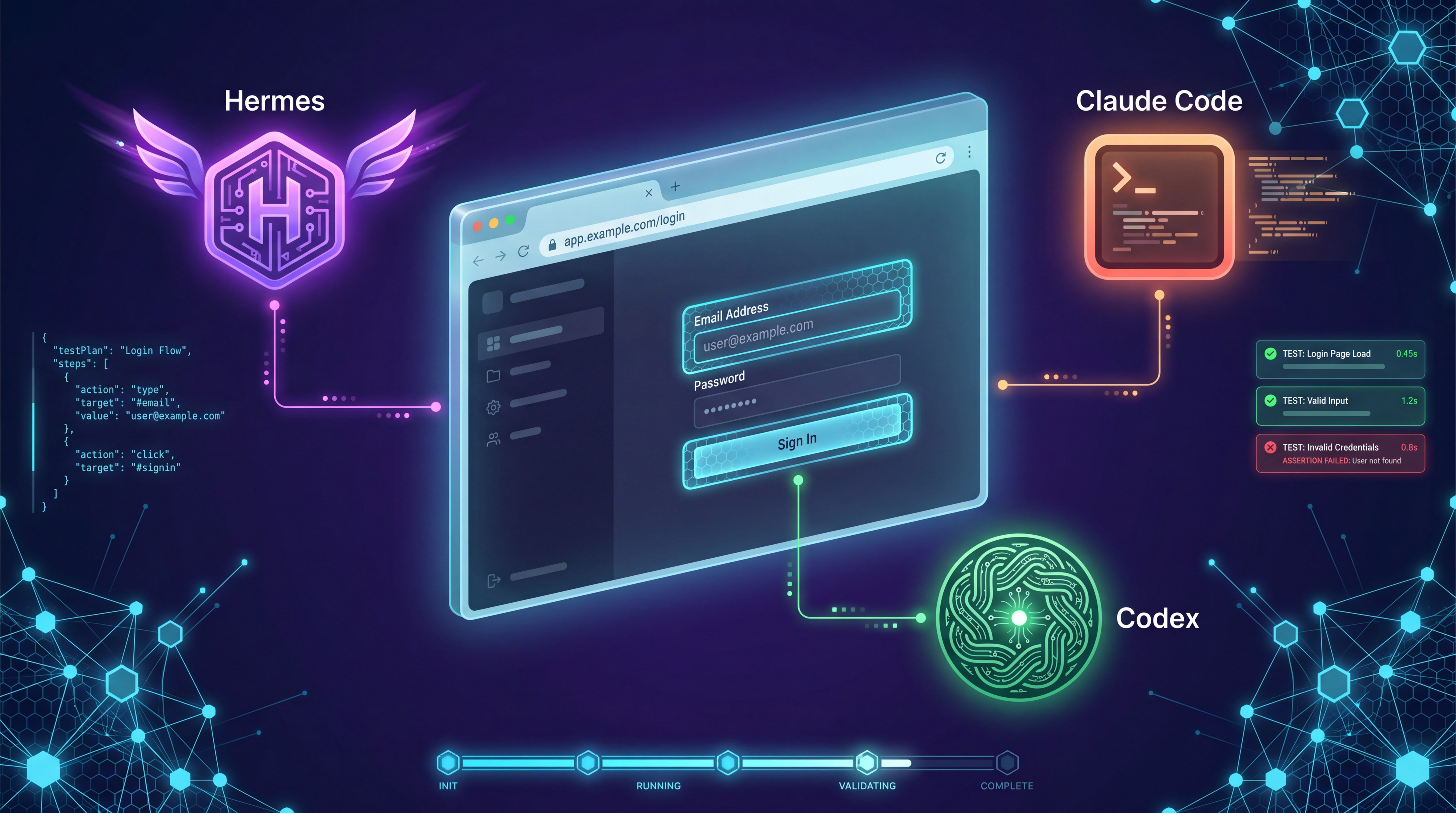
This is why the Hermes QA agent integration is built around open models. Hermes is open source, from Nous Research, and runs on any of 200+ models through OpenRouter with your own API key. If one model is restricted, deprecated, or repriced, you point Hermes at another and the workflow does not change: the same tc getTestPlan to browser to tc report loop keeps running.
That loop is the real insurance. It is agent-agnostic and model-agnostic by design, because the contract between TestCollab and your agent is two CLI commands, not a particular vendor. Claude Code and Codex plug into the same contract, so the goal is not to abandon any one model. It is to never be a single directive away from a stalled pipeline.
A short resilience checklist
- Know your dependency. List every model your QA agents rely on today.
- Choose model-portable tooling. Prefer agents that let you swap models without rewriting workflows.
- Keep an open-source fallback you can run, route, or self-host.
- Standardize on a model-agnostic contract so results flow the same regardless of which model drives the browser.
Fable 5 will likely come back. The lesson will not. Resilience in AI-driven QA is optionality: the ability to change models on a Friday night and still ship on Monday.
See how the Hermes QA agent runs your test plans on open models, or compare all three QA agents, and keep a fallback you control.