

Most release management best practices were written for a world where a human typed every line, and where the number of changes per week was limited by how fast people could type. That limit is gone. The practices built on top of it are quietly failing.
Nothing about your release process is wrong in principle. The problem is that it was tuned for a rate of change you no longer have.
What actually changed
Three things moved at once.
Volume went up. Your team opens more pull requests per week than it used to, and each one arrives faster than the last.
Review capacity did not. The number of people who can meaningfully read a diff is the same as it was last year. When the queue grows and the reviewers do not, approval stops being a judgment and starts being a formality.
The failure mode changed. AI-written code tends to work. It compiles, it passes the happy path, and it looks reasonable in a diff. What it misses is the thing nobody wrote down: the edge case your team learned about during an incident two years ago, the ordering constraint that is not in any docstring, the assumption that only lives in someone's head. We looked at this pattern in more detail in our earlier piece on the hidden cost of AI coding tools.
So the code that reaches your release is more plausible and less understood than it used to be. Plausible and wrong is a harder problem than obviously broken.
Shrink what a bad release can reach
Start here, because these practices work no matter how much you trust the code. They are also the ones most teams skip, because they feel like infrastructure work rather than quality work.
1. Ship every change behind a flag you can turn off without a deploy. If reverting requires a build, a pipeline, and an approval, your recovery time is measured in the slowest link. A flag turns a bad release into a bad ten minutes.
2. Roll out to a small cohort first, and watch it before you widen. Pick the cohort deliberately. Internal users, then one percent, then ten. The point is not the percentage. The point is that somebody is actually looking during the window when looking still helps.
3. Rehearse the rollback on an ordinary Tuesday. A rollback path that has never been executed is a hypothesis. Teams that practice it discover the missing database migration step in daylight rather than at 2am.
4. Set an error budget, and stop shipping when you spend it. This is the only practice on this list that changes behavior without anyone having to make a judgment call under pressure. It converts an argument into arithmetic.
None of these four are things we sell. We list them first because they are the highest-leverage work available to most teams, and because a release process that skips them is fragile no matter how good its testing is.
Release risk management starts before the release
Release risk management fails most often not because teams pick the wrong criteria, but because they pick them too late. Once a release is in flight, every criterion becomes negotiable.
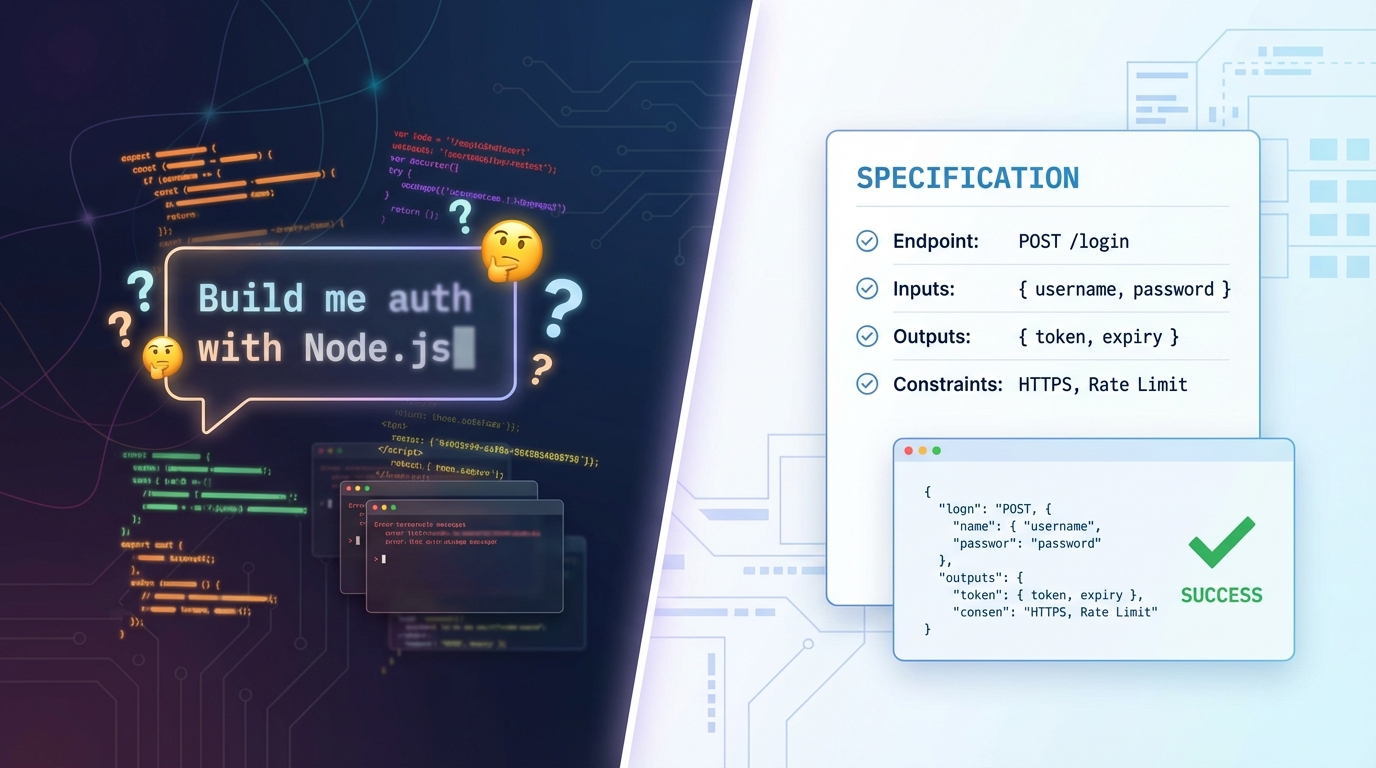
5. Write the release criteria before the release starts. Decide in advance what "ready" means, in numbers. Which suites must pass. What coverage of the changed areas is required. Which severities block. Write it down while nobody is under pressure, because the value of the criteria is entirely in having agreed to them before you wanted to ship.
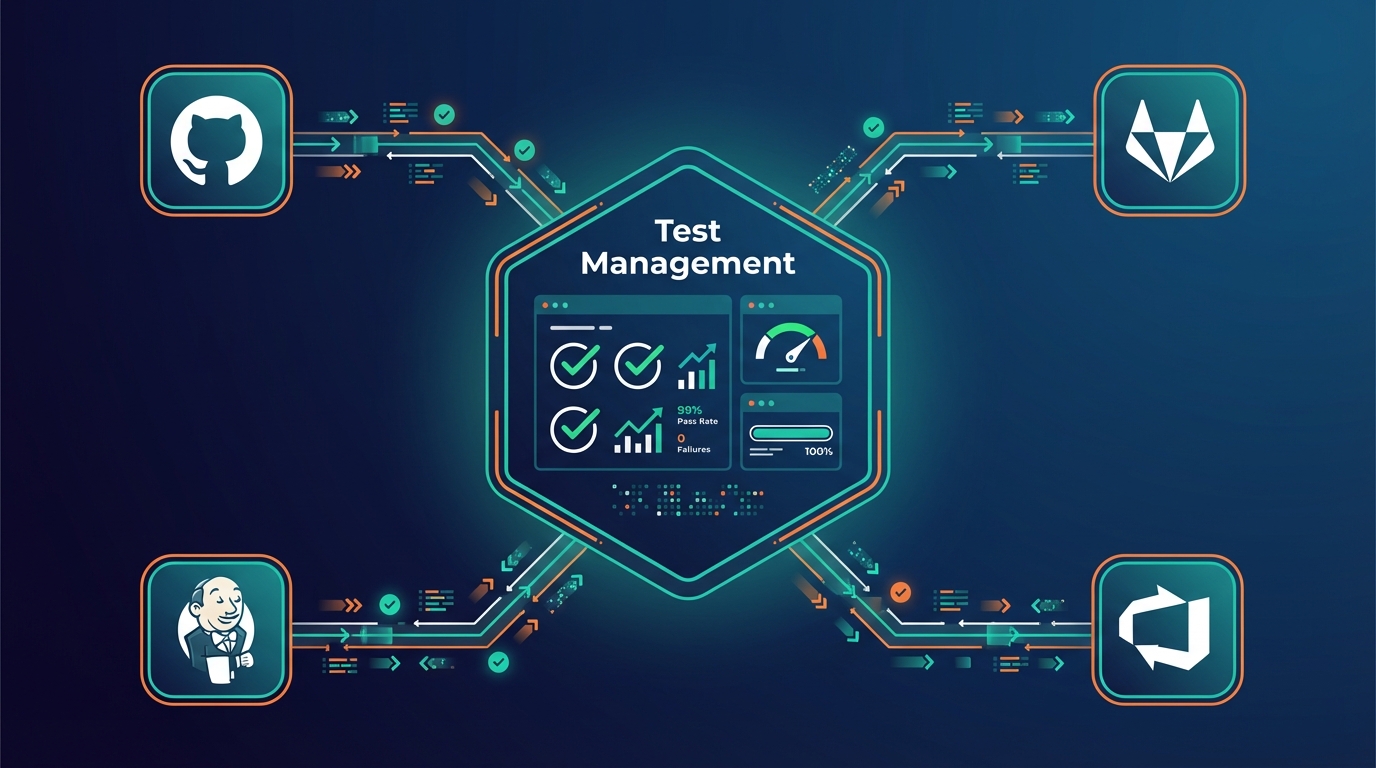
6. Gate the pipeline on a result, not on a green log. A pipeline step that exits zero tells you the step ran. It does not tell you what was verified. A quality gate should read an actual test result, compare it against the criteria you wrote in practice 5, and fail the build when the bar is not met. If your gate cannot answer "which cases passed, and against what version", it is a status light rather than a gate.
7. Let change failure rate and defect escape rate set your pace. These two numbers are the honest scoreboard for a release process. Change failure rate tells you how often a release causes a problem. Defect escape rate tells you how many defects your process handed to production instead of catching. When AI raises your merge volume, watch whether these hold steady. If they climb while everyone reports that reviews are going fine, the reviews are not going fine.
For deciding what to test hardest when you cannot test everything, our risk-based testing guide covers the prioritization side of this in depth.
Make verification survive the argument
This is where release management gets genuinely different when agents are involved.
When a human reviewer approves a change, there is an accountable person behind the approval. You can ask them what they checked. When an agent reports a pass, you have a string. The string may be accurate. It may also be the output of a run that verified nothing, and you cannot tell the difference by reading it.
That is not an argument against using agents. We build them. It is an argument for treating an agent's verdict as a claim that needs a record behind it, rather than as a result.
8. Pin every result to the exact version it tested. "The login tests passed" is close to meaningless six weeks later. "These twelve cases, at revision 41, passed against build 2.9.3" is a fact you can act on. Without the pin, a test result and a later test change are indistinguishable in the record.
9. Trace each requirement to the run that verified it. The useful question before a release is not "how many tests passed". It is "which of the things we promised are covered, and which are not". A traceability matrix answers that in one view. A pass count never will.
10. Keep the evidence after the run ends. CI logs expire. Ephemeral runners are ephemeral by design. If the only proof that you tested something lives in a job that ages out in thirty days, then in thirty-one days you did not test it, as far as anyone can demonstrate. We wrote about this gap specifically in the context of test evidence at scale.
11. Record which model and prompt produced an agent's verdict. When an agent misses something, the first question is why. Was it a different model? A changed prompt? A tool that failed silently mid-run? If you did not record the model, the prompt version, and the run's own output, you cannot answer any of those, and you will end up debating the agent's competence in the abstract instead of reading what it actually did.
12. Keep a named human on the release decision. Automate the checks. Do not automate the accountability. Somebody signs, and that somebody can be asked afterward what they were looking at. This is a practice, not a tool, and it is the one most likely to be quietly dropped as volume grows.
Release management best practices, as a checklist
If you want the short version to take to your next planning session:
- Flag every change so you can disable it without a deploy.
- Roll out progressively and watch the first cohort.
- Rehearse the rollback before you need it.
- Set an error budget and honor it.
- Agree release criteria before the release starts.
- Gate on a result, not on a green log.
- Track change failure rate and defect escape rate as your pace signal.
- Pin results to the exact version tested.
- Trace requirements to the runs that verified them.
- Retain evidence beyond the life of the pipeline.
- Record the model and prompt behind every agent verdict.
- Keep a named human on the release decision.
The first four shrink the blast radius. The next three decide what "ready" means. The last five make your verification hold up when somebody asks about it later.
The part that does not scale
Look at practices 8 through 11 together and a pattern shows up. Every one of them is about keeping a durable record of what was verified, against which version, by what, and when.
Most teams have no place to put that record. Pull requests describe intent. CI logs describe runs and then expire. Chat transcripts are not records. Spreadsheets go stale the moment a test changes. So the record does not get kept, and six months later, when an auditor or an incident review asks what was actually tested before the release that broke, the honest answer is that nobody knows.
That gap was survivable when release volume was human-limited. It is not survivable when the volume triples and the reviewer count does not.
Where TestCollab fits
We built TestCollab around exactly that record.
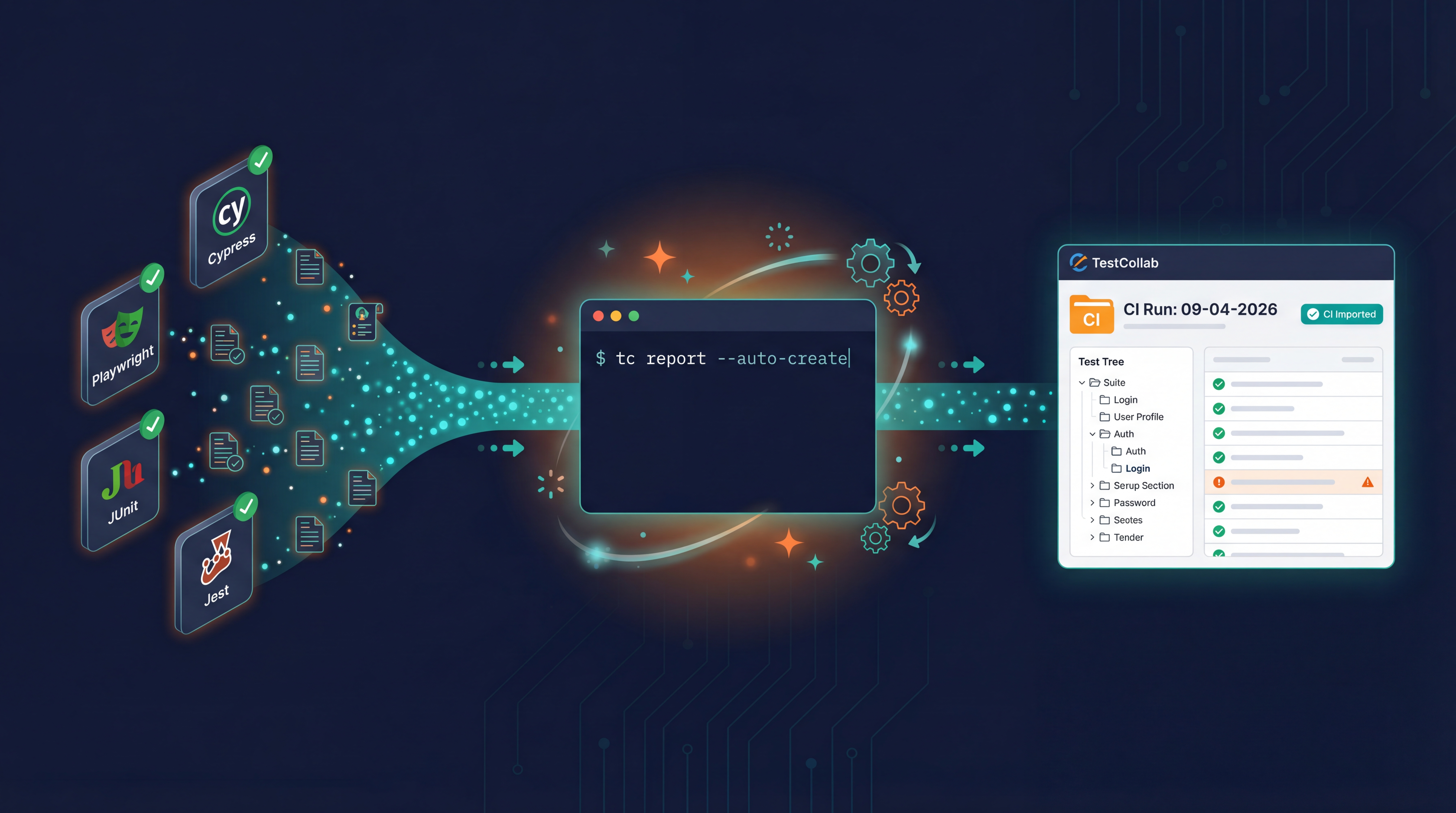
Every execution is pinned to the specific test case revision it ran against, with step-level results and attachments, so practice 8 happens automatically rather than by discipline. Requirements link to the runs that verified them. Evidence stays after the pipeline is gone. The tc gate command in our CLI reads a test plan's actual latest run and exits non-zero when your criteria are not met, so practice 6 is a real gate rather than a status light.
And when one of our QA agents executes a plan, we store the run: which model, which prompt version, what it did at each step, and what it produced. When an agent reports a pass, you can go and read what it actually did.
We do not do the first four practices on this list. Flags, progressive rollout, rollback rehearsal, and error budgets belong to your delivery stack, and you should get them in place regardless of what you use for testing. We handle the half that answers "what did we verify, and can we still prove it".
If the twelve practices above describe a gap on your team, start a free trial and see what your last release actually left behind.