
Agentic QA has grown up. A year ago an AI agent could draft test cases and not much else. Today an agent can read a code change, choose the checks that matter, run them in a real browser, collect evidence, and file the bug. We build this kind of tooling at TestCollab, a test management tool where a team keeps its test cases, runs them, and reports the results.
One thing has not moved: the go-ahead.
What agentic QA can do now
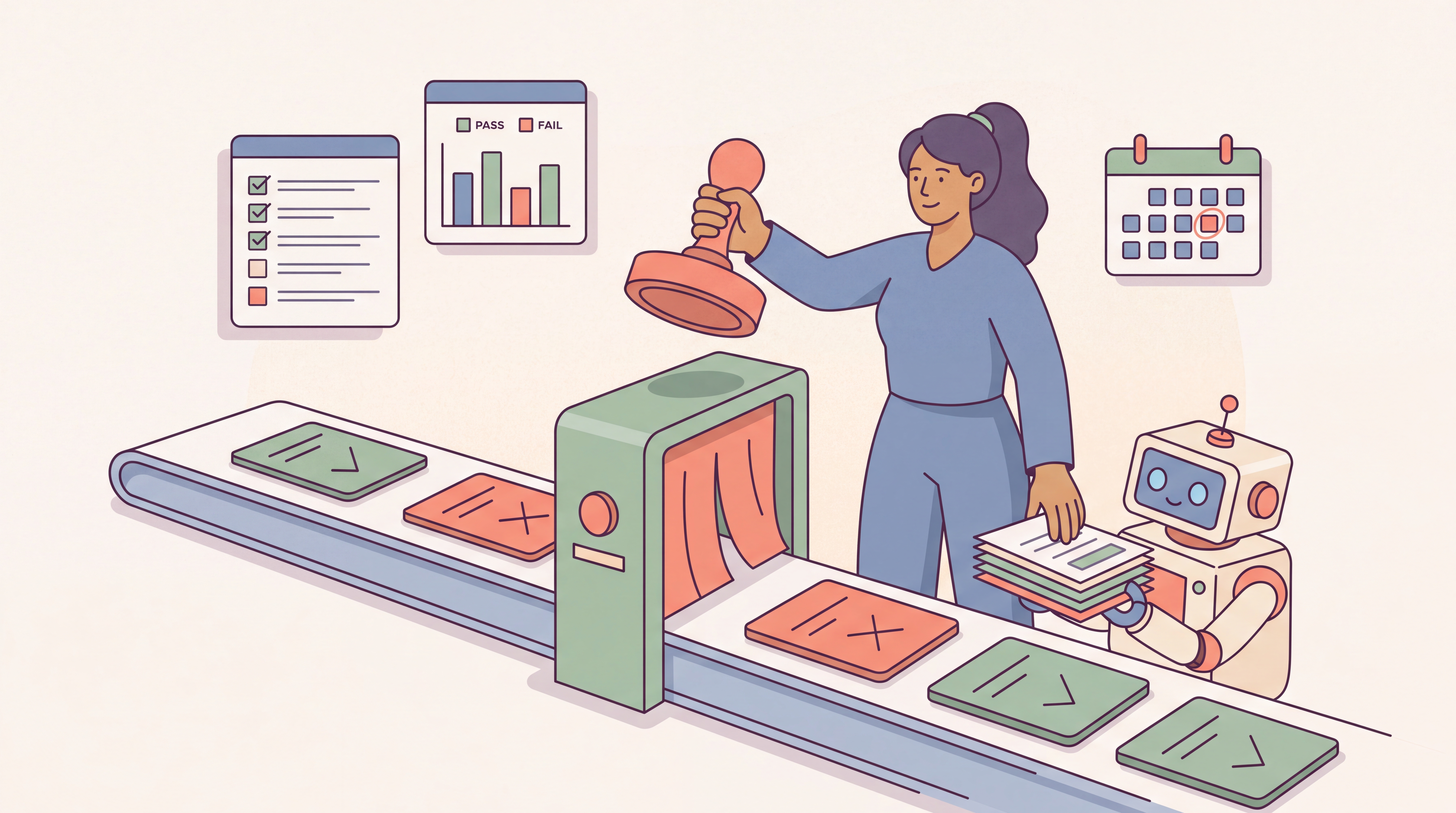
An agent today is a very good executor. Give it a clear instruction and a safe environment and it will carry the instruction out. It does not get bored on the four hundredth regression run. If your test plan is explicit, the agent will run it end to end and hand back a report with screenshots, logs, and a pass or fail for every step.
Why AI in QA still needs a human go-ahead
Trust is a different thing from capability. A green report from an agent is evidence. It is not a decision. Somebody still has to look at the evidence and say: this is good enough to ship, or it is not. Somebody has to notice that the test plan itself was wrong, or that the agent checked what we asked for and not what the customer needed. We said this when we announced our own agents: the human does not leave the loop, the human governs it.
The go-ahead belongs to a person because the consequences land on a person. An agent cannot be accountable for a bad release. A QA lead can.
The meat proxy problem
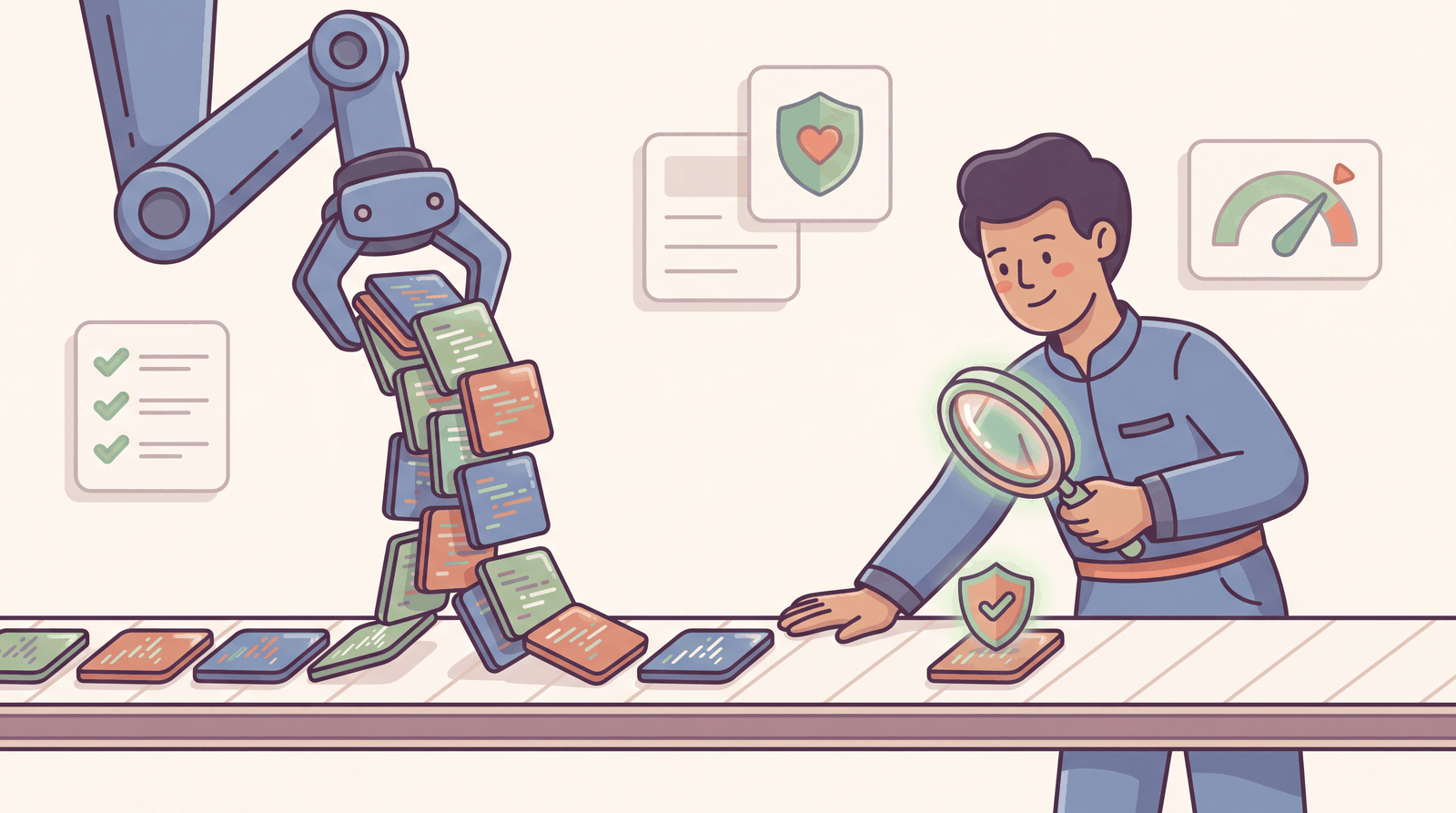
Software engineer Niklas Gruhn coined a term for a role that is disappearing: the meat proxy. A meat proxy forwards AI output without reading it, understanding it, or checking it. The person is a relay between the model and the recipient, and adds nothing on the way.
This is where QA professionals need to be honest with themselves. If your job is to take an instruction, execute it exactly as written, and report back, you are competing with the agent on its home ground. The value of pure execution is trending toward zero. Not next decade. Now.
Judgment is your QA career moat
If you are a top performer in this field, stop treating AI as a threat. It removes the part of your job that was never the valuable part. What we reward, and what other executives will reward, is the part the agent cannot do:
- Judgment. Knowing which failure matters and which one can wait.
- Initiative. Finding the risk nobody asked you to look at.
- Thinking like a product owner. Asking whether the feature is right, not only whether it works.
- Customer focus. Testing the way a real user behaves, not the way the ticket describes.
These are your moats. AI will not replace QA testers who do this work. It will replace the relay.
Let the agents execute. Keep the go-ahead. To see how we split that work, start a free TestCollab trial and run your first test plan with an agent beside you.